What Building Our Own Products Taught Us About Websites That Sell
By Cee · 16 November 2026 · 5 min read
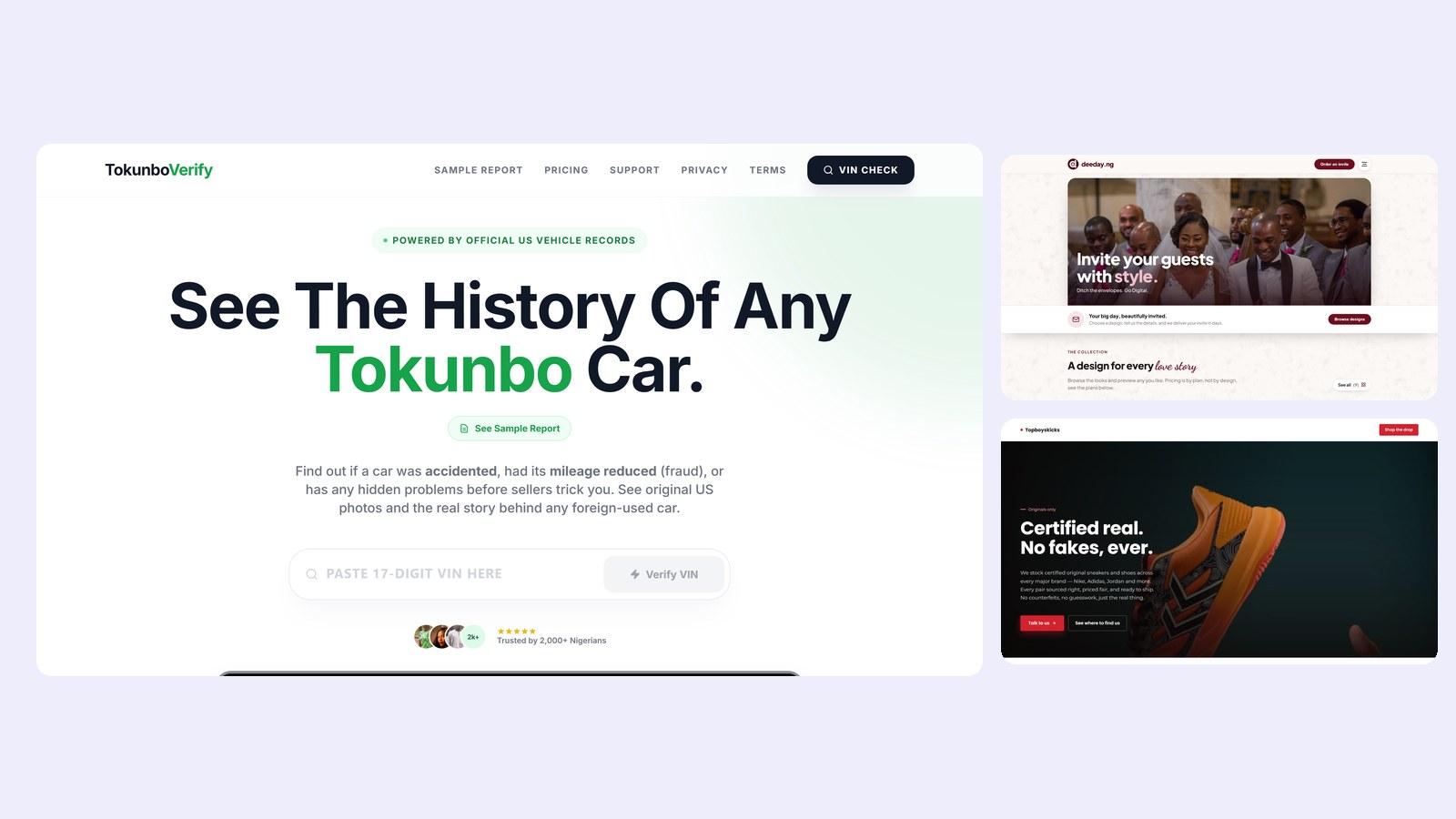
Most agencies show you client logos. We would rather show you what we learned running products ourselves, because that is where the expensive lessons happen. Over the past two years we have built a car history platform, a wedding invitation service, an online sneaker store and a parenting website. Some of these are client work, some are our own ventures, and one is run by a company where Cee is now the COO.
Each one taught us something about what makes a website actually earn: what makes a stranger trust it, what makes them pay, and what brings them back. This post collects those lessons in one place, so you can use them on your own site whether or not you ever work with us. If you are still deciding whether a site is worth it at all, start with whether owning a website is profitable.
The four products, in one paragraph each
TokunboVerify lets someone buying a foreign-used car in Nigeria enter the car's 17-digit VIN and see its US history before paying: title records, auction photos, mileage and insurance records, explained in plain language by an AI layer called "Oga Mechanic". We built the whole platform, and Cee is now the company's COO. The site reports over 2,000 users.
Deeday is our own wedding invitation service. A couple picks a design, fills one form, and gets a personalised invitation website they share on WhatsApp, with RSVPs, countdowns, maps and gift details built in. Over 80 couples have used it.
Topboyskicks is a client: an original-sneaker store in Enugu. We did the brand, the website and the automations behind it, and we are now working on their Google Business Profile.
Kiddore is our own parenting website: plain-language articles for new parents and a free resources section sent by email. It taught us the most about content, and about how much patience a content site needs.
You can read the full write-ups on our work page.
Lesson 1: Trust is designed, not claimed
Every one of these products sells something people are nervous about. A car is often someone's largest purchase. A wedding happens once. Sneakers online raise one question above all others: are they real?
What worked was showing evidence instead of adjectives. TokunboVerify says where its data comes from, names the US government title database it checks, and shows a sample report before you pay. Topboyskicks leads with "certified originals" and lets customers pay on confirmation. Deeday lets couples preview every design live before ordering. None of these sites asks you to simply believe them; each gives you something to check.
 Couples can open any Deeday design as a working preview before they order. | Screenshot: deeday.ng, 13 November 2026
For your own site, the question is: what is your customer afraid of, and what can you show them that answers it?
Lesson 2: Meet customers on the app they already use
In every product we built, WhatsApp beat every other contact method. Deeday's orders, RSVPs and aso-ebi orders run through WhatsApp. Topboyskicks has a short form on its site that opens WhatsApp with the customer's message already written: brand, style, size. TokunboVerify offers WhatsApp support next to email.
The lesson is not "use WhatsApp". It is: put the next step in the place your customers already spend their day. For some businesses that is email or a booking calendar. The mistake is forcing people into a channel they don't use.
Lesson 3: Clear plans sell better than custom quotes
Deeday started with custom requests. It grew once we turned it into two clear plans, each with a written list of what is included, how many working days delivery takes and how many rounds of changes you get. TokunboVerify does the same with bundle pricing for dealers who check many cars.
People hesitate when they don't know what they will pay or what they will get. Writing it down removes that hesitation, and it also protects you from endless changes.
Lesson 4: Automate the boring middle, not the relationship
The parts we automated are the parts nobody enjoys: turning a form into a finished order, sending confirmations, recording RSVPs, delivering free resources by email. The parts we kept human are the ones that build trust: answering a nervous buyer's question, fixing a wording change a couple asked for, checking a delivery.
If you want ideas for your own business, our guide on how to start an automated business walks through the order we use.
Lesson 5: Content sites take longer than anyone admits
Kiddore taught us patience. A content site earns from visitors over time, and building that audience takes steady publishing, honest sourcing and months before search traffic arrives. We still believe in it, but we would never promise a client quick income from a blog alone. A website that brings in customers for a business that already sells something pays off much faster.
What this means for your business
Our reading of these four products, offered as analysis rather than a formula: the websites that earned did three things well. They answered the customer's biggest fear with evidence, they made the next step easy on the app customers already use, and they were clear about price and delivery. Design mattered, but only in service of those three.
You can apply all three this week without rebuilding anything. Add one piece of proof to your homepage. Put a WhatsApp or booking button where people decide. Write down what each service includes.
Where Omenala fits
We build websites, products and automations for business owners, and we test our ideas on our own products first. If you want a second opinion on what your site is missing, send us the link and we will tell you honestly, starting with the cheapest fix.
Why we show our own work
It is easy to give advice. It is harder to run products that real people pay for and see what actually works. These four taught us more than any course, and every site we build for a client is better for it.
This article contains analysis and opinion based on publicly available information. Projections and forecasts reflect the author's interpretation of current trends and should not be treated as confirmed outcomes. Readers are encouraged to consult primary sources and form independent conclusions.