Trust Signals That Make Customers Pay Online: Lessons From Our Products
By Cee · 16 November 2026 · 4 min read
Customers pay online when the site answers their fear before they have to ask. Trust signals are the parts of a page that do that: proof of where your information comes from, a preview of what they will get, clear prices, real ways to reach you and honest policies. Without them, even a good product looks risky to a stranger.
We have learned this the practical way, by building and running sites where people pay for things they are nervous about: a report on a used car, a wedding invitation, a pair of original sneakers. This post shows the trust signals that worked on each, and how to add the same ones to your own site. It follows on from our earlier post on how to sell on WhatsApp with a website.
Why trust matters more online
In a shop, customers can touch the product and look you in the eye. Online they have a screen, a price and a worry. Every unanswered question, such as "is this real?", "what if it goes wrong?" or "who is behind this?", becomes a reason to close the tab.
Google's own guidance for creators points the same way: it describes its systems as aiming to reward helpful, reliable, people-first content, and asks site owners whether readers would trust what they find. A site built to earn trust tends to do better with customers and with search.
Signal 1: Show where your information comes from
TokunboVerify sells car history reports. The obvious fear is: where does this data come from, and is it real? So the homepage says it plainly. Reports are built from official US vehicle records, including NMVTIS, the US title database overseen by the Department of Justice, plus auction and insurance records.
Naming the source does two things. It answers the fear, and it gives the customer something they can check for themselves. Vague claims like "trusted data" do neither.
Signal 2: Let people see it before they pay
TokunboVerify shows a sample report before you buy one. Deeday lets couples open a live preview of every invitation design, with the music, countdown and RSVP working, before ordering. On both sites, the preview is one of the most clicked buttons on the page.
A preview removes the biggest unknown: "what exactly am I getting?" If your product is a service, the equivalent is examples of past work, a sample of the deliverable or a short video of the process.
Signal 3: Clear plans, written down
Deeday's two plans each list exactly what is included, how many working days delivery takes, how many rounds of changes you get and how long the invitation stays online. TokunboVerify lists bundle prices for dealers who check many cars.
Clear plans signal that you have done this before and that there are no surprises. Customers who can see the price decide faster, and the ones who can't afford it leave without wasting your time or theirs.
Signal 4: Answer the product's specific fear
Every business has one fear that matters more than all the others. For Topboyskicks, an online sneaker store, it is fakes. So the store leads with "certified originals, no fakes, ever", offers pay on confirmation, and lets customers walk in to the shop if they want to see a pair first.
Generic trust badges matter less than answering this one fear directly and in plain words.
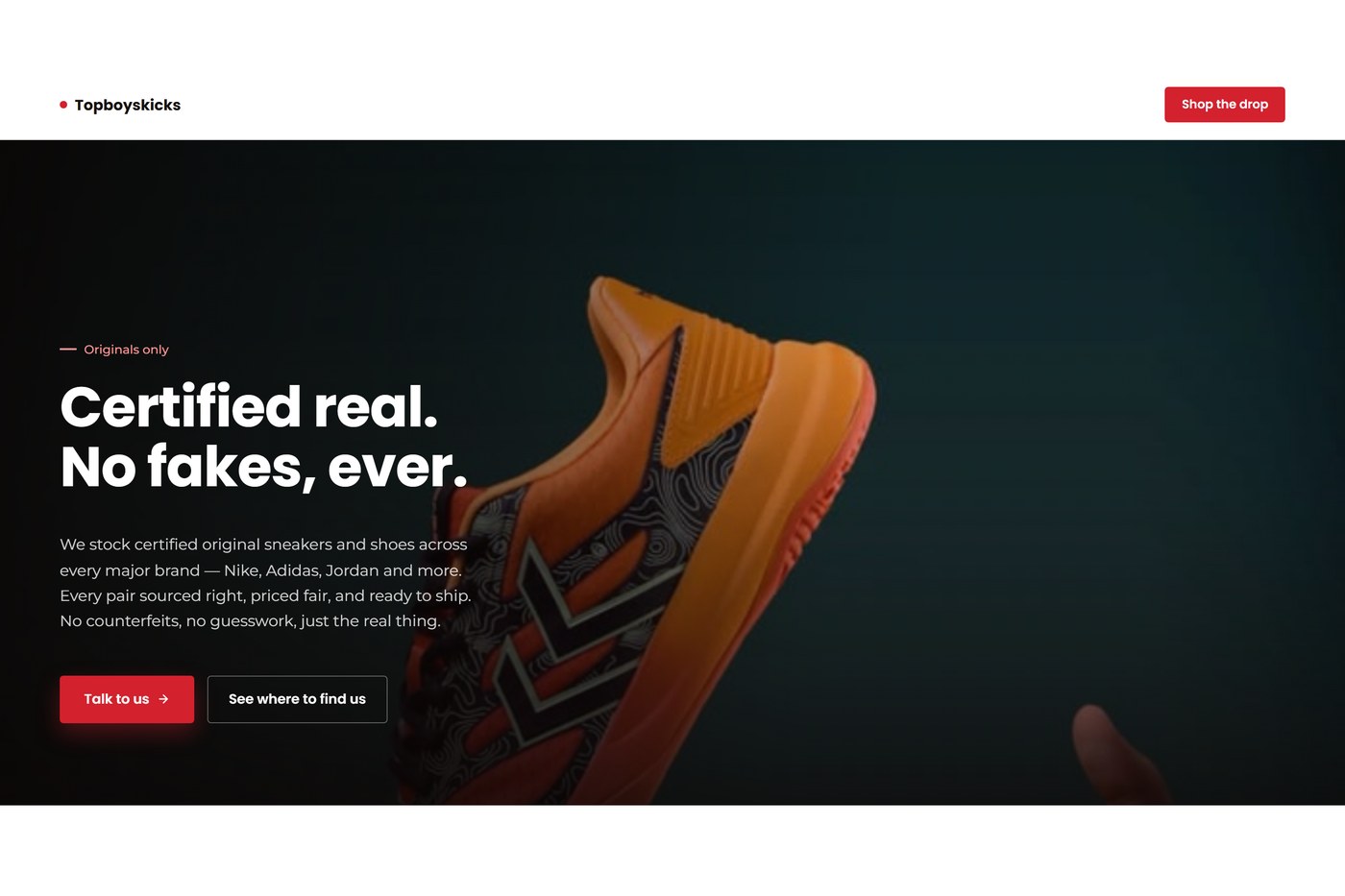 Topboyskicks answers the fear of fakes in its first line. | Screenshot: topboyskicks.com, 13 November 2026
Signal 5: Real people, real ways to reach them
A phone number, a WhatsApp button, an email address and a physical location where there is one. Every product we run shows at least two ways to reach a person. An About page that says who runs the business, and why, helps too.
The fastest way to lose trust is a contact form that goes nowhere and a phone number nobody answers.
Signal 6: Honest reviews, never fake ones
Reviews help, but only real ones. In the United States the Federal Trade Commission has a final rule banning fake reviews and testimonials, and Google's review policies treat incentivised reviews as fake engagement. Fake reviews are also easy to spot: they all sound the same and nobody has a full name.
Ask real customers after a good result, make it easy with a direct link, and show reviews where they can be checked, such as your Google Business Profile.
A checklist for your own site
Go through your homepage and your main product or service page and ask:
- Does the first screen say what you sell and who it is for?
- Is the customer's biggest fear answered on the page, with evidence?
- Can they preview, see a sample or view past work before paying?
- Are prices or plans written down?
- Are there at least two ways to reach a real person?
- Are refund, delivery or revision policies easy to find?
Any "no" is a place you are probably losing customers.
What this means for your business
Our analysis from running these products: design gets attention, but trust signals get payment. The highest-value change on most small business sites is not a redesign, it is adding the one piece of proof that answers the customer's biggest fear.
Where Omenala fits
We build websites with these signals designed in from the start, and we can review your current site to find the missing ones. See the projects behind this post on our work page, or ask us to look at your site.
In short
Name your sources, let people preview, write down your prices, answer the one fear that matters, and make it easy to reach a real person. That is what turns visitors into paying customers.
This article contains analysis and opinion based on publicly available information. Projections and forecasts reflect the author's interpretation of current trends and should not be treated as confirmed outcomes. Readers are encouraged to consult primary sources and form independent conclusions.