What Can I Automate to Make Money? 8 Honest Ideas That Actually Pay
By Cee · 14 November 2026 · 5 min read

You can't automate money itself, but you can automate the work that people pay for. That gives you two honest routes: automate jobs inside your own business so it earns more for the same effort, or set up automations for other businesses and charge for it. Both work. Neither works without real customers paying for a real result.
Most "make money while you sleep" promises skip that second part. A tool that sends messages or moves data is only worth something if the messages win customers or the data saves someone hours. Keep that test in mind for every idea below. If you want the bigger picture on earning with AI, our post on the honest maths of making $10,000 a month goes deeper.
Two ways automation turns into money
1. Inside your own business. Every hour you stop spending on copying details, chasing invoices or answering the same question is an hour you can spend on work that earns. Automation also stops leaks: enquiries that never got a reply, invoices nobody chased, customers who were never asked back.
2. As a service for other businesses. Many owners know they waste time on repeated jobs but don't have the time or skills to fix it. Setting up and looking after those automations is a service businesses pay for, often monthly.
The eight ideas below cover both routes.
8 things you can automate that make money
1. Replying to new enquiries
Slow replies lose customers to whoever answers first. An automation that sends an instant reply, captures the enquiry in one list and reminds you to follow up turns more messages into sales. For your own business it pays straight away; for clients it's one of the easiest automations to sell, because the value is obvious.
2. Booking and reminders
Every no-show is a paid slot that earns nothing. Online booking plus an automatic reminder the day before cuts the empty slots, and lets customers reschedule instead of simply not turning up.
3. Chasing unpaid invoices
Money that's owed but not collected is money you've already earned. Scheduled, polite reminders that stop once the invoice is paid get you paid sooner without awkward calls.
4. Asking for reviews
More reviews bring more customers, especially on Google. An automatic message the day after each finished job, with a direct review link, keeps reviews coming in steadily. Never offer rewards for reviews; Google treats that as fake engagement.
5. Order processing for an online shop
If you sell online, orders can flow into one list, confirmations can go out automatically, and stock counts can update themselves. That lets one person handle far more orders than doing it all by hand.
6. Turning one piece of content into many
One good post can become a WhatsApp status, a social caption and a short email to customers. AI drafts the versions; you check them. Businesses pay for content that keeps them visible without eating their week.
7. Simple reports for owners
Many owners don't know how many enquiries they got last month or how many they won. An automation that pulls sales, enquiries and reviews into one weekly summary is genuinely useful and easy to charge for monthly.
8. Digital products with automatic delivery
Templates, guides or checklists can be sold online and delivered the moment someone pays. The automation is the delivery; the money still depends on making something people want and getting it in front of them.
What it costs to start
The tools are cheap compared with what they can save. When we checked their pricing pages on 12 November 2026, Zapier's free plan included 100 tasks a month with two-step automations, and its Professional plan started at $19.99 a month billed yearly. n8n's hosted Starter plan was $20 a month billed annually. Prices change, so check before you rely on them. We compare these tools in the best AI tool for business automation.
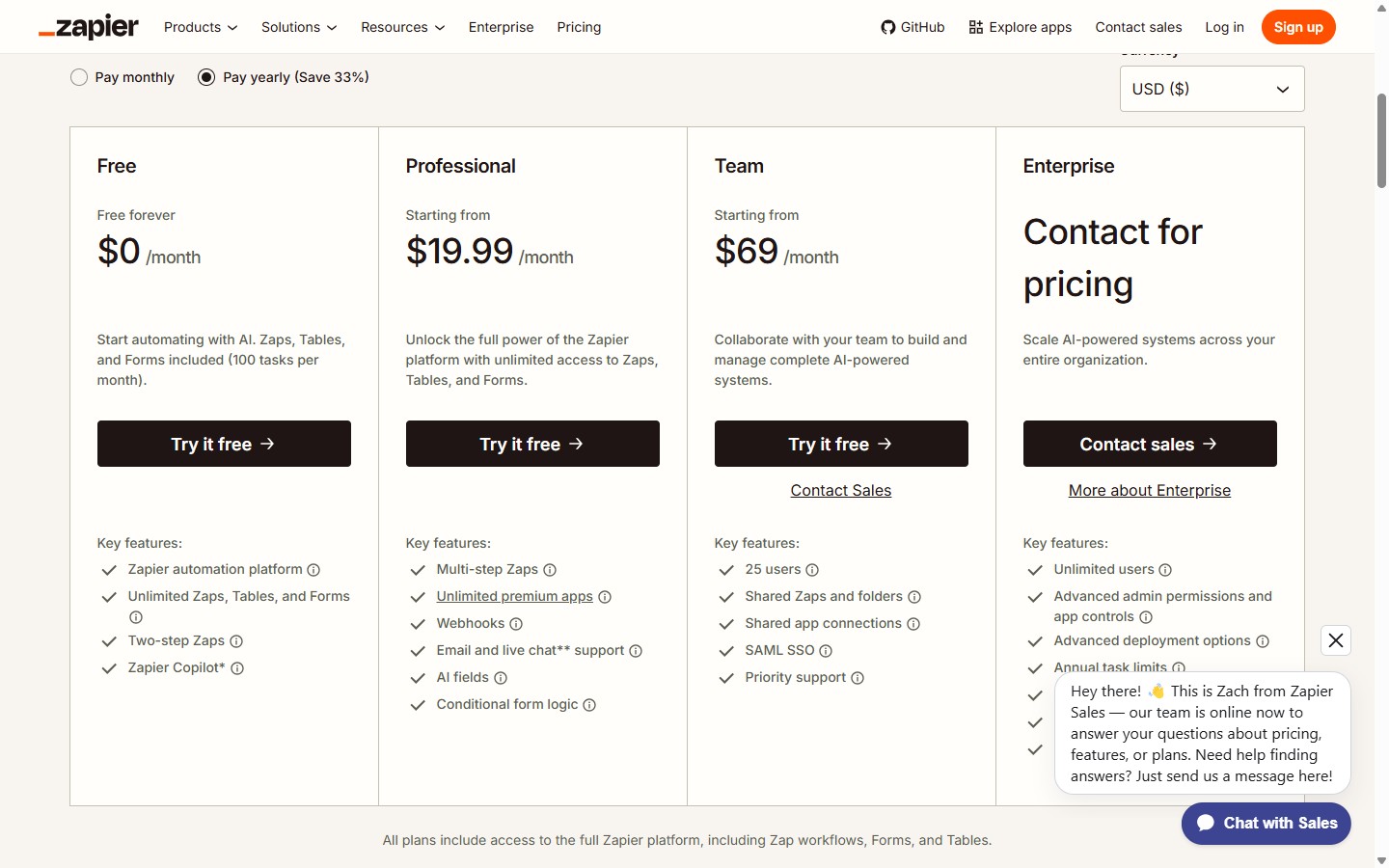 Most automation tools have a free plan good enough to test an idea. | Screenshot: zapier.com/pricing, 12 November 2026.
The real cost is time: learning the tools, setting things up properly and fixing them when something changes. If you are selling automation to others, that upkeep is exactly what they are paying you for.
What to be careful of
A few warning signs:
- "Passive income bots" and automated trading systems. Anyone selling a system that promises automatic income with no customers, product or service behind it deserves deep suspicion. This post is not financial advice, and we don't recommend any of them.
- Automating something nobody wants. Faster delivery of a product no one buys still earns nothing.
- Letting automation make money decisions. Prices, refunds and discounts need a person to approve them.
- Spamming. Automated mass messaging to people who never asked for it damages your reputation and can break the law in many countries.
How to pick your first one
Ask three questions about each idea. How often does this job happen? How much time or money does it cost when it goes wrong? Would anyone notice and pay if it got better? The job that scores highest on all three is your starting point. For most businesses that is replying to enquiries or chasing invoices, because both happen every week and both cost real money when they slip.
Where Omenala fits
If you run a business, the quickest money from automation usually comes from the first four ideas: faster replies, fewer no-shows, invoices paid sooner and more reviews. We set those up for business owners, test them properly and hand over a short guide so you stay in control. If you're not sure which one would pay off first for you, tell us how your week goes and we'll point to the job worth automating first.
The honest answer
Automation makes money when it is attached to something people already pay for: a service, a product or time saved for a business. Start with the job that costs you the most time or loses you the most customers, automate that one properly, and measure what changes. The money follows the result, not the tool.
This article contains analysis and opinion based on publicly available information. Projections and forecasts reflect the author's interpretation of current trends and should not be treated as confirmed outcomes. Readers are encouraged to consult primary sources and form independent conclusions.