How We Built Deeday: Turning Wedding Invitations Into a Product
By Cee · 18 November 2026 · 4 min read
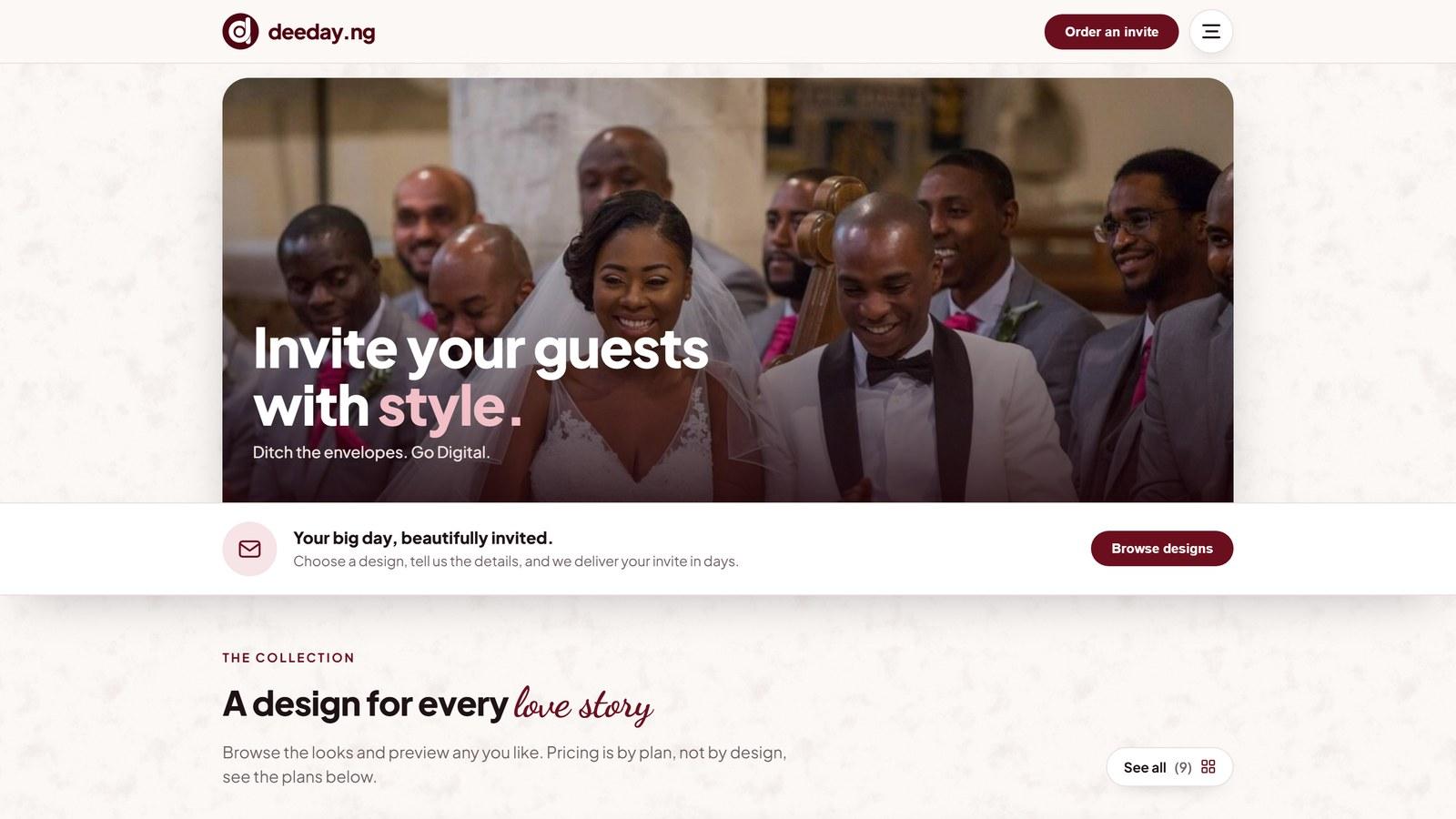
Deeday is our own product: a digital wedding invitation service where a couple chooses a design, fills one form and receives a personal invitation website to share on WhatsApp, usually within a few working days. Over 80 couples have used it. It started as one-off custom invitations and became a product once we turned what we were doing by hand into a catalogue, two clear plans and a repeatable delivery process.
This post explains how we built it, the decisions that made the difference, and what any service business can borrow from it. You can see the live product at deeday.ng and our summary on the Deeday case study page.
Where it started
Couples wanted invitations that looked as good as the wedding and reached every guest on their phone. Printed cards are expensive, slow to deliver and impossible to update. Generic online templates didn't fit the way many weddings actually work, with several events, aso-ebi colours, family groups and gift details.
So we started by building invitations one at a time. Each one taught us what couples asked for and what guests needed. After enough of them, the pattern was clear enough to turn into a product.
Decision 1: A catalogue, not a blank page
Couples find it hard to describe what they want from nothing. They find it easy to point at something and say "that one". So Deeday has a catalogue of designs, each with a live preview: classic church, Yoruba traditional with aso-oke stripes, editorial black and gold, wax-seal envelopes, a magazine-style wedding website and a shareable WhatsApp flyer, among others. There are also dedicated pages for styles couples search for, such as Yoruba wedding invitations and Igbo wedding invitations.
Live previews mattered more than any description. A couple who can tap through the music, countdown and RSVP before ordering already knows what they are buying.
Decision 2: Price by plan, not by design
Early on, every design had its own price and every order became a negotiation. We changed to two plans. The simpler plan covers the essentials: a personal link, details, countdown, directions, RSVP via WhatsApp, a gift box and delivery in two working days. The fuller plan adds a personal domain, a dashboard for RSVPs and aso-ebi orders, music, a gallery, a PIN-protected private event and personal reminders, with delivery in three working days.
Any design can be ordered on either plan where it fits. The plan decides the features and the price. That one change made ordering faster and removed most of the back-and-forth.
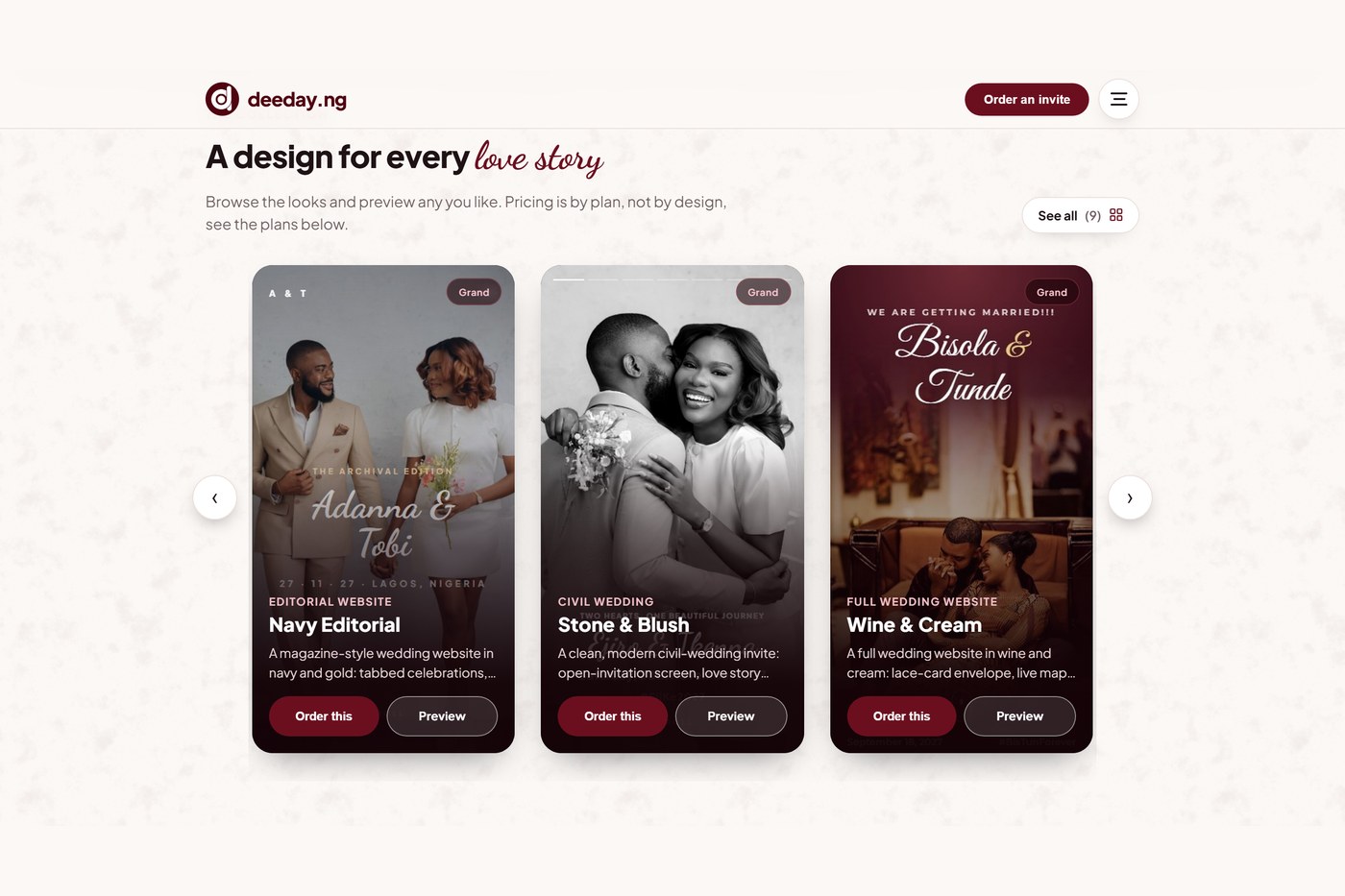 Every design has a live preview, so couples see exactly what they will get. | Screenshot: deeday.ng, 13 November 2026
Decision 3: WhatsApp at both ends
The couple's order arrives on WhatsApp through one form, because that is where couples already plan everything. Guests RSVP and order aso-ebi through WhatsApp from the invitation, because that is where guests already are. No one has to install anything or create an account.
We wrote more about this pattern in our post on selling on WhatsApp with a website.
Decision 4: Written promises
Each plan states the delivery time in working days, counted from when we have the details, photos and payment. It states how many rounds of changes are included and what a change covers: wording and photo swaps, not a different design. It says how long the invitation stays online and how to extend it.
Writing these down protected couples and us. Couples know what to expect, and we can deliver on time because the scope is clear.
Decision 5: Automate the build, keep the care
Behind the scenes, much of the work of turning a couple's details into a finished invitation is systemised, which is what makes delivery in days possible. What we kept personal is the care: checking names are spelled right, that the colours match the couple's photos, that the map points to the right gate. Weddings are emotional, and a careless mistake costs more trust than a slow reply. A misspelled name on an invitation shared with hundreds of guests is not a small error, so every invitation is checked by a person before the link goes out.
What we would do differently
Looking back, we would have moved to fixed plans sooner. The months of pricing each design separately cost us time on every order and slowed couples down. We would also have built the dashboard earlier, because it answers the question couples ask most often in the weeks before the wedding, "how many people have replied?", without anyone having to count chats by hand. Both lessons point the same way: the sooner you remove questions from the customer's side, the smoother the whole business runs.
What we learned
Three lessons we now apply to client work. First, productise what you already do by hand: a catalogue and clear plans turned a custom service into something that scales. Second, put the next step where customers already are, which for Deeday meant WhatsApp at both ends. Third, write the promises down, because clarity reduces disputes and speeds up decisions. We also found that a dedicated page for each popular style, such as church weddings, helps couples searching for exactly that style find us. The trust side of this is covered in our post on trust signals that make customers pay online.
Where Omenala fits
At Omenala we build products like Deeday for other businesses: a catalogue customers can browse, clear plans, ordering through WhatsApp or a website, and automation behind it so delivery stays fast. If you run a service business that does the same job over and over by hand, it may be ready to become a product. Tell us about it.
In short
Start by doing it by hand, then turn the pattern into a catalogue with previews, two clear plans and written promises. Put ordering where customers already are, automate the build, and keep the care personal.
This article contains analysis and opinion based on publicly available information. Readers are encouraged to consult primary sources and form independent conclusions.