How We Built TokunboVerify: A VIN Check Platform With an AI Mechanic
By Cee · 17 November 2026 · 4 min read
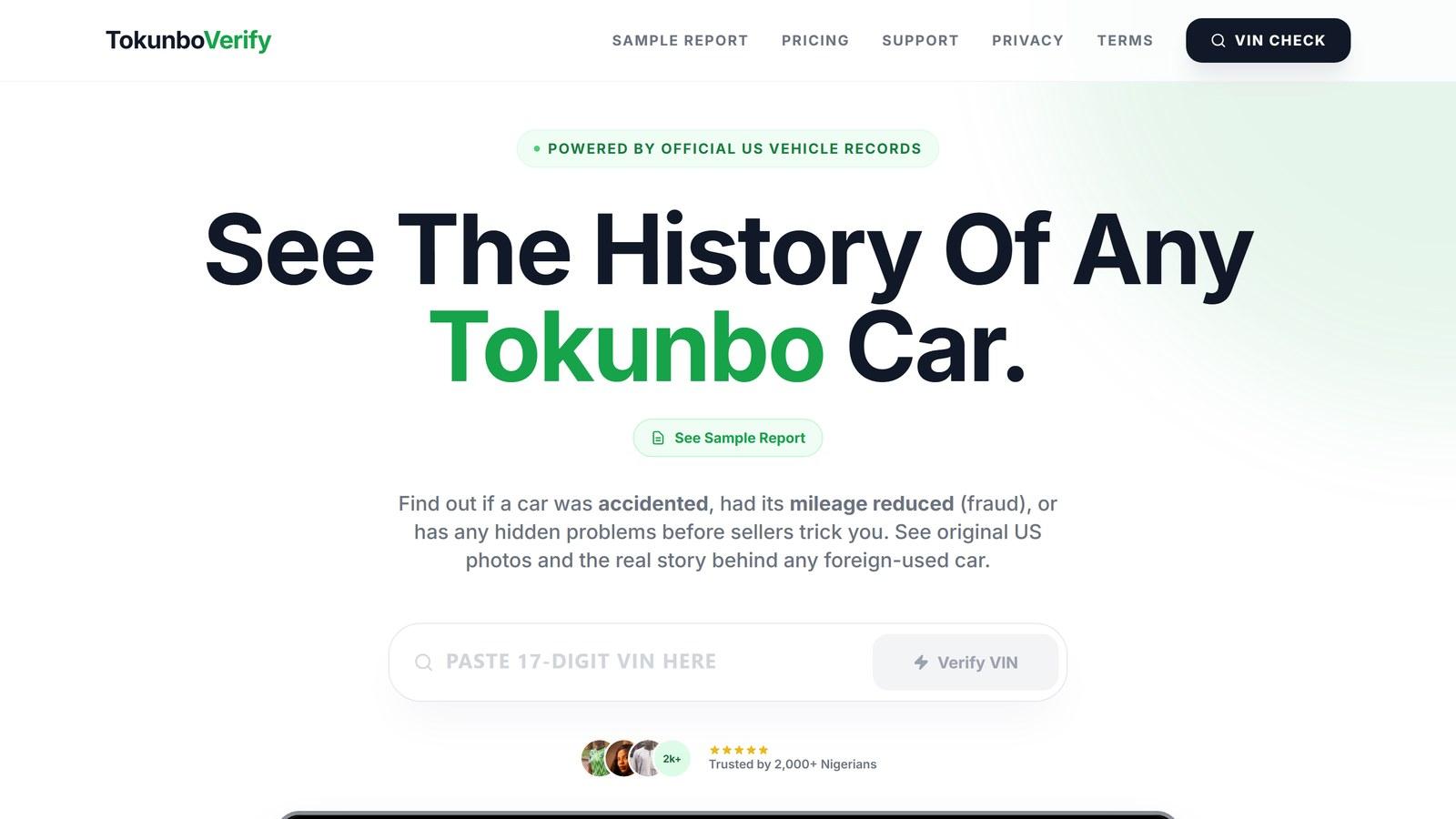
We built TokunboVerify to solve one problem: people buying foreign-used cars in Nigeria were paying for flooded, crashed and clocked cars that looked clean on the day. The platform lets a buyer type in a car's 17-character VIN and, in about 30 seconds, see its US history: title brands, mileage records, auction photos and insurance records, explained in plain language by an AI layer the team named "Oga Mechanic".
This post walks through how the product works, the decisions behind it and what we learned. Disclosure: Omenala built the platform, and Cee is now the company's COO, so we didn't hand it over and leave. You can see the live product at tokunboverify.com and the summary in our case study.
The problem we were solving
Most foreign-used cars in Nigeria, known locally as tokunbo cars, come from the United States. In the US, a car's life leaves records: title changes, auctions, insurance claims and odometer readings. By the time a car reaches a buyer abroad, those records are out of sight, and a fresh coat of polish hides the rest.
The founders wanted a buyer to be able to check a car's past before handing over the money, on a phone, without technical knowledge. That last part shaped everything.
How it works
The buyer's journey has four steps, and the homepage says them in this order:
- Enter the VIN. The buyer finds the 17-character number on the dashboard or the driver's door and pastes it in.
- We search. The platform queries official US data, including NMVTIS, the title database overseen by the US Department of Justice, plus auction and insurance records.
- AI analysis. "Oga Mechanic" reads the raw records and highlights the risks in plain language.
- You know. The buyer gets a report with photos, mileage history and the car's story.
Decision 1: Plain language over raw data
Raw vehicle records are full of codes and abbreviations. A buyer standing next to a car doesn't want to decode "SALV" or compare odometer entries by date. So we added an explanation layer on top of the data. It summarises what the records mean: whether the car was branded as flood or salvage, whether the mileage went backwards, what the auction photos show.
The name mattered too. "Oga Mechanic" sounds like the trusted mechanic a buyer would call, which made a technical feature feel familiar. The AI explains the records; it doesn't invent history. Every point it raises is tied to the underlying data.
Decision 2: Show the source, show a sample
Buyers were being lied to by sellers, so they were naturally suspicious of a new website too. We answered that in two ways. The homepage names its data sources plainly, and there is a sample report anyone can open before paying. We covered why this works in our post on trust signals that make customers pay online.
Decision 3: Pre-export photos
The single most persuasive part of a report is often a photo: the car at a US auction, before repair. A buyer who sees the front end crushed in a photo doesn't need convincing about the history. We made these photos prominent wherever they exist.
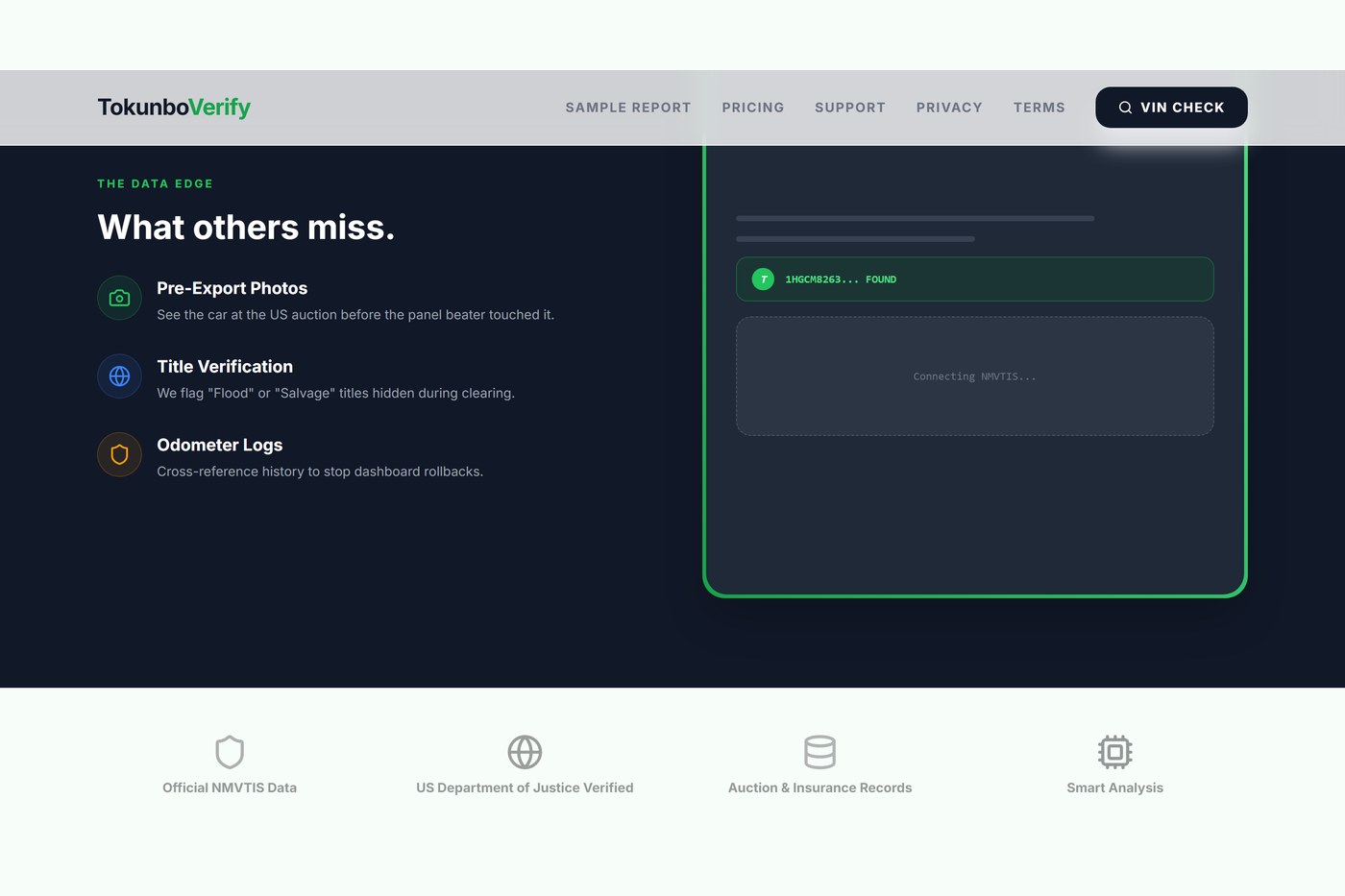 The three things buyers can't see on the car: pre-export photos, title brands and odometer history. | Screenshot: tokunboverify.com, 13 November 2026
Decision 4: Payments and bundles for dealers
Most buyers check one car. Dealers and serious buyers check many. We built sign-up, online payments and discounted bundles, so a dealer can check every car they consider without paying full price each time. That turned a one-off purchase into repeat use.
Decision 5: Built for phones
Almost every check starts on a phone, often at a car lot. The flow had to work with one thumb on a mobile connection: a big VIN box, a short payment step and a report that reads well on a small screen.
What the results look like
TokunboVerify's site reports over 2,000 users. We don't publish revenue figures for the company. What we can say is that the product does what it was built to do: it puts facts in a buyer's hands before they pay, and it gives them evidence to negotiate with or a reason to walk away. For buyers, our guide on how to check a car's history with its VIN explains how to use any service like it.
What we would do differently
Two lessons, offered honestly. First, we would have built the sample report even earlier; it answered more doubts than any amount of copy. Second, trust work never ends. Every new channel, from social media to WhatsApp support, needs the same clarity about where the data comes from and what it can't tell you, such as the car's mechanical condition today.
What a report can't tell you
We were careful from the start about what the product does not do. A history report tells you what happened to a car in the records. It can't tell you how the engine sounds today, whether the brakes were replaced last month, or whether a repair was done well. NMVTIS itself says its reports are not a substitute for an independent inspection, and we say the same to buyers. Being clear about the limits is part of why people believe the rest of the report.
Where Omenala fits
TokunboVerify is the kind of product we like building most: messy data, a real-world problem and users who need a clear answer quickly. We handled the platform, the product design and the operations, and we still help run it. If you have a business idea that depends on turning complicated information into a simple answer for customers, tell us about it.
The short version
Name your data sources, explain them in plain language, show a sample before payment and design for the phone. That is how a technical product earns the trust of nervous buyers.
This article contains analysis and opinion based on publicly available information. Readers are encouraged to consult primary sources and form independent conclusions.